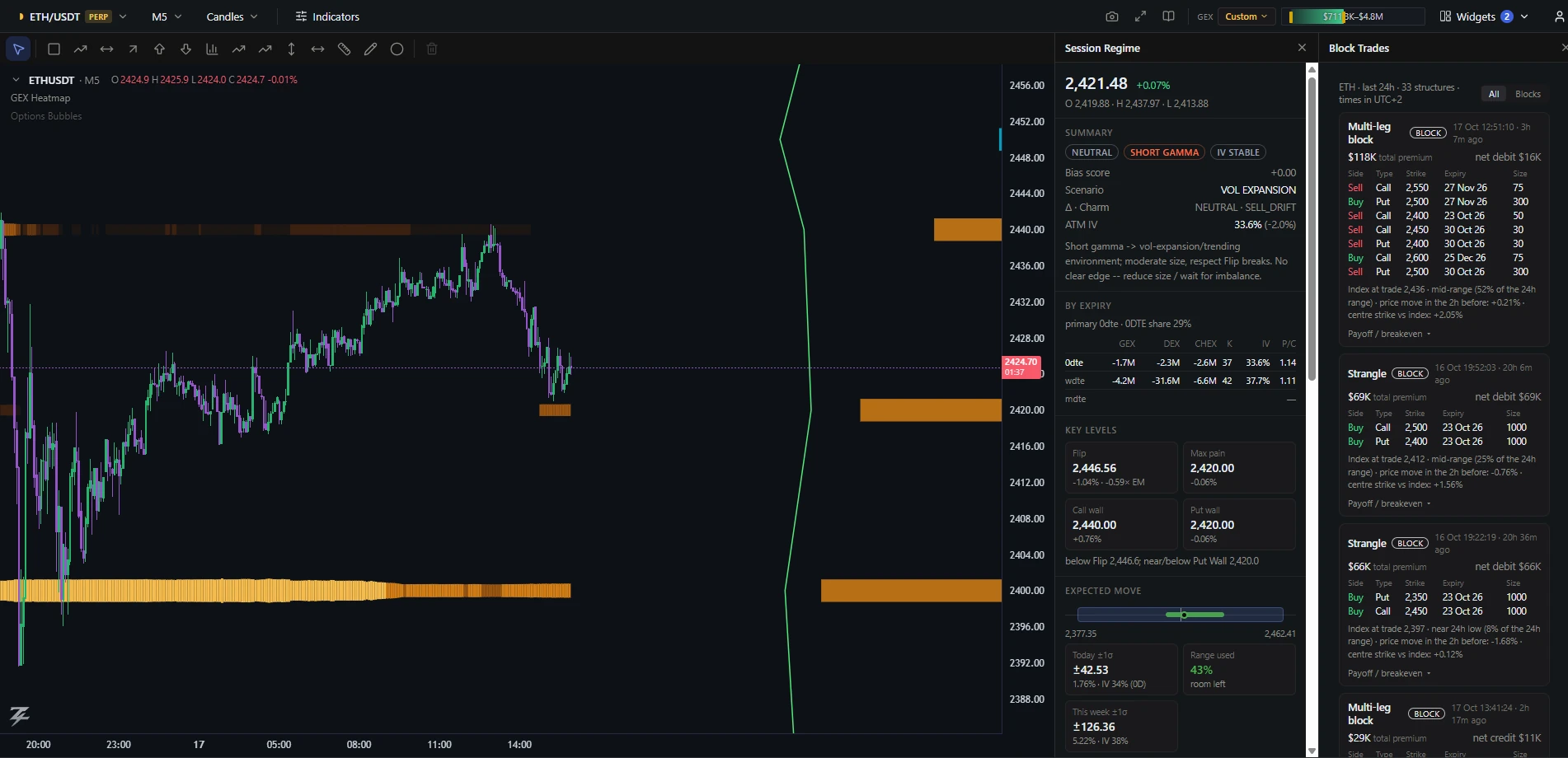
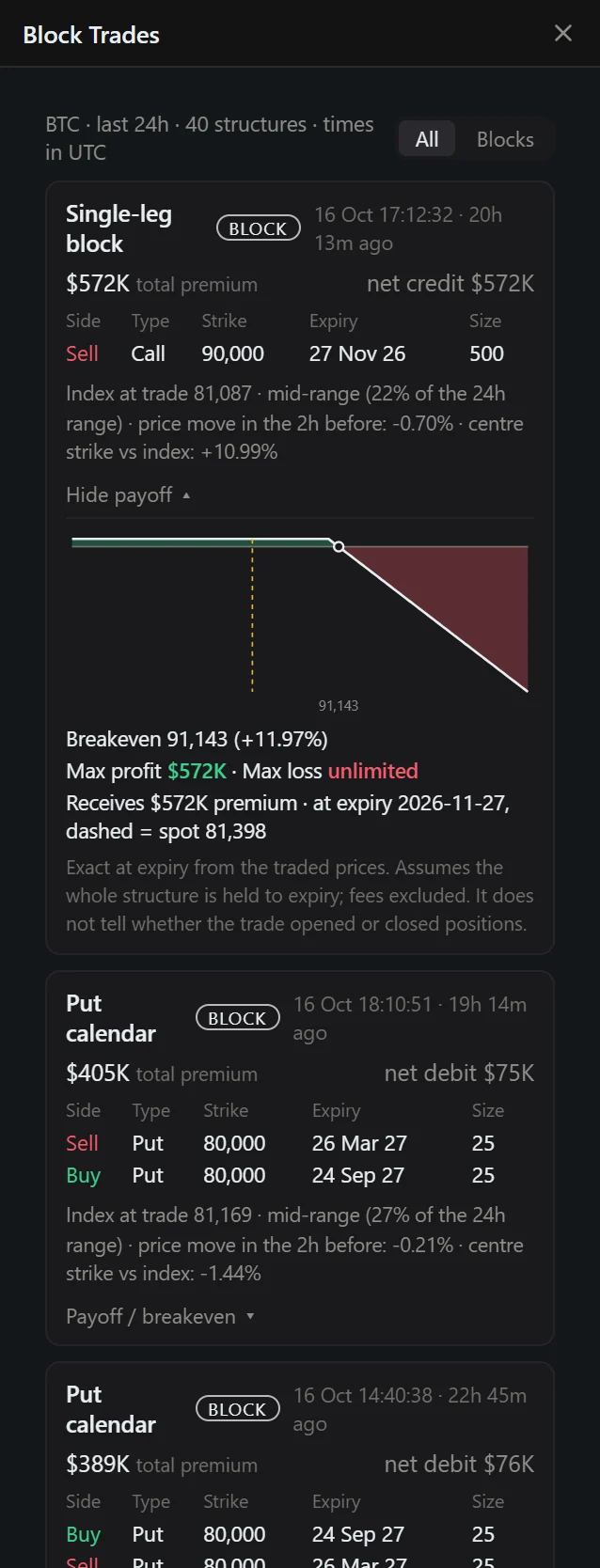
What it's for
Lists the biggest block trades and spreads of the last 24 hours (BTC / ETH). All legs of a trade are grouped into one card, so you read the structure rather than isolated prints.
Anatomy of a card
- Name + BLOCK badge — what kind of structure it is (call spread, calendar, straddle…) and whether it was a negotiated block.
- Gross — total premium across all legs. Debit / credit — the net money paid (debit) or received (credit) for the structure. Chapter 3 explains what that means and how risk differs between the two.
- Legs table — Buy / Sell, call or put, strike, expiry, number of contracts. Buy / Sell is from the point of view of the side that initiated the trade.
- Context line — price at the time of the trade, where it was in the 24-hour range, the 2-hour move before it, and how far the centre strike is from price.
How to read a card
- Direction or volatility? A structure that profits if price goes one way is directional; one that profits from a large move either way (straddle, strangle) or from price staying put (butterfly, condor) is about volatility.
- Where is the money riding? Open the payoff and find the breakevens and the profit peak. Those prices matter to the trader.
- Compare to the expected move. Are the breakevens inside today's / this week's expected move (cheap to reach) or outside (needs a bigger-than-priced move)?
- Check the context line. A bullish structure bought after a sharp drop near the 24h low reads differently from one chasing a rally near the high. Whether that looks like a target, a hedge or a fade is your judgement.
- Add up repeats. Several cards with the same strikes and ratio a few minutes apart are usually one big order sliced into pieces. Sum them for the real size.
Liquidations have their own widget: Widgets → Liquidations (BTC / ETH). It lists the exchange's forced trades of the last 24 hours with the direction each one forced (forced buy / forced sell) and the 24-hour totals. These are forced trades: they can add fuel to a move but say nothing about conviction, and they are left out of the bullish / bearish totals in Session Regime.